Ebook
Build Smarter. Deliver Faster. Stay Ahead



‘Teamwork makes the dream work’ is a great rally cry – and especially appropriate when considering the different jobs, roles, and positions in construction that work together to deliver successful builds.
The industry is complex, composed of specialized roles, expertise, skills, and tools that contribute to the completion of projects to high quality standards, within budget and on time. If the end goal is to bring construction projects to life efficiently and profitably, then each individual role sharing knowledge and experience in an organized way with project partners and teams is fundamental and foundational.
Interested in a career in construction? Even if you’re familiar with the industry, since it’s always changing, it’s useful to refresh your knowledge of the various construction job titles and the role each plays in managing the complexities of our industry. This blog provides a comprehensive list of current construction roles with some insights into how they can collaborate to make construction dreams work.
The construction industry’s origins date back to the Stone Age, growing and developing massively over the centuries. Technological innovations over time have created new construction titles while construction responsibilities have evolved for other roles. The sector maintains a healthy employment record across the globe:
Despite the high numbers, the global construction sector has been suffering from labor shortages for a while. It's cause for concern but also an opportunity for anyone considering a career in the building sector, or for professionals exploring different positions in construction, especially given the growing rate of retiring construction professionals.
Among the many workforce challenges our industry faces, companies must manage rising material costs and economic uncertainty, calling for smart recruiting and retention strategies, and the deployment of technology that builds on existing talent.
Now, let’s examine this list of construction job titles up close and how they all fit together.
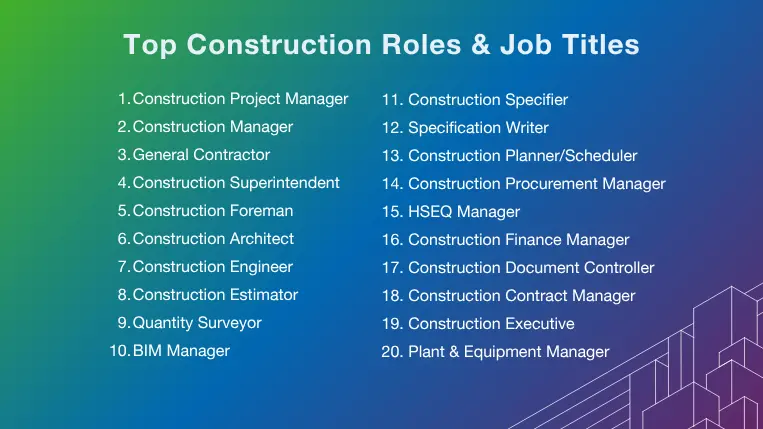
A construction project manager (PM) is the main point of contact with the client and is responsible for ensuring that all client requirements are met. PMs oversee the entire construction project from start to finish, ensuring that all phases go as planned. Their responsibilities include project planning, budgeting, scheduling and risk management, quality assurance, and performance tracking, among other things. They use construction project management software to gain a 360° view of all project aspects and progress to complete tasks effectively and professionally. They need strong leadership and problem-solving skills, industry knowledge and technical capability, and the ability to coordinate effectively with stakeholders holding different positions in construction projects and foster a culture of collaboration across teams, project partners, and clients.
A construction manager (CM) is essentially the site manager, highly skilled in all aspects of construction, including the different trades, methods, materials, and equipment. CMs manage all aspects of the actual building phase, which often makes their position the most senior on site. Apart from site management, they are responsible for hiring and overseeing contractors, conducting regular quality inspections, and generating reports to monitor the progress of all construction responsibilities and keep the rest of the teams in the loop. Like the project manager, CMs must possess a high level of industry and technical knowledge, excellent time management and leadership skills, and the agility to pivot and solve problems or deal with any unexpected situations that arise during the construction phase.
A general contractor (GC) is a professional hired through a bidding process to lead the construction work. GCs are responsible for subcontractor management and are often placed in charge of coordinating materials and equipment. They are often confused with CMs because of their on-site management roles, but the two roles differ in many aspects. CMs are hired directly by the client before the project even begins, assisting with design, planning, and procurement due to their deep knowledge of the construction process. As the most senior position on-site, a CM oversees the work of a GC to ensure the work complies with the signed contract. The GC is hired only for construction and has a lot more responsibility over the finished construction work as they are being paid just for that.
A superintendent is the GC’s right hand person and mouthpiece on site. Construction superintendents manage and oversee the work to ensure it remains on schedule and meets the standards, as agreed upon by the GC and the client. They are always present on the job site: they are first to arrive in the morning and last to leave at the end of the day to see to it that everyone has what they need to complete the work. By collaborating closely with engineers and subcontractors to make sure all resources are available for each assignment, they help avoid delays. Depending on the project’s size and type, the superintendent’s role and responsibilities can vary – some large projects may even require multiple superintendents to cover different areas.
A construction foreman works under the superintendent as leader of their crew, which can be a specific trade or specialty. Construction foremen are considered the superintendent’s eyes and ears and take responsibility for informing the superintendent about any issues or areas of concern in their specific trade. For example, some of the equipment their crew uses needs servicing or repairs, or in the event that there is a shortage of materials, and so on. As leaders of their trade, they might also be required to organize their team’s schedules and supervise the job to ensure it is carried out correctly.
A construction architect is responsible for developing and managing the project’s design. As leaders of the design team, they must collaborate with other stakeholders, engineers in particular, to ensure that the design follows safety, health, and building regulations, as well as meets the client’s expectations. This includes the development of drawings and, in some cases, specifications, advising on innovation and sustainability in the design, and carrying out the final inspections. To that end, they must possess a range of skills, such as attention to detail, analytical thinking, and the technical proficiency to effectively manage construction design software.
A construction engineer makes sure that the design meets safety and building regulations and requirements. This includes assessing the viability and potential risks of the design based on factors like site conditions or environmental impact and advice if adjustments are required. Construction engineers are responsible for ensuring that the project is built according to the drawings and specifications, and for solving any issues arising during construction that need technical solutions. Among the many skills required are industry knowledge and experience, problem-solving skills, and the technical proficiency to use professional construction engineering software.
A construction estimator is responsible for project estimating and managing project costs. Estimators collect data about the time, materials, labor, and equipment required to complete the work. They use professional cost estimation software to determine how much the project will cost. The role varies depending on who hires them. If they are hired by the owner, for example, they help to make investment decisions at the project’s conceptual stage, develop estimates for tendering, assist in contract negotiation, and control costs throughout the project. If a contractor hires them, their main responsibility is to estimate costs to bid for the project and help choose subcontractors, materials, and construction methods that align with the budget and quality requirements as per contract.
Quantity Surveyors (QS) must have extensive experience in the construction industry as they provide advice on effective cost management throughout the project. Their responsibilities include generating the bill of quantities (BOQs), performing cost estimation, control, and analysis, assisting in tendering and procurement, and contributing to value engineering strategies, among other activities. The roles of estimators and QS can sometimes be confused as their functions might overlap. However, the scope of work of QS expands throughout the project lifecycle, supporting and advising the different teams about financial management and contract administration. By contrast, the estimator’s role is more focused on preconstruction.
As the name suggests, a BIM manager generates, manages, and updates a company’s building information modeling (BIM) strategies. They help implement BIM management software tools and processes into construction projects and assist in training employees on the benefits of the methodology. BIM managers help generate and coordinate the BIM models, supervising the processes to ensure that quality and regulatory requirements are respected throughout the project. As experts on BIM technology, they generate reports and extract learning opportunities to apply to future projects. Like their counterparts previously discussed, this role requires leadership skills, industry knowledge, understanding of BIM-related legal and regulatory requirements, and strong analytical thinking, among others.
A construction specifier generates detailed specifications containing technical and operational requirements for materials and equipment. Specifications serve as a manual to guide project stakeholders on how to execute the work in accordance with quality and client requirements. Specs become the single source of truth around which teams collaborate and communicate. Specifiers must advise on material selection for durability, optimal performance, and costs, among other details. They also offer advice on different construction methods to maintain cost-effectiveness and quality standards across the project. While specifiers have the technical expertise to write specifications, whether they perform that task depends on the project. This is how a construction specifier's role differs from that of a specification writer: spec writers focus solely on the spec writing process while specifiers play a senior consultation role for the entirety of a project.
A specification writer crafts detailed descriptions – referenced throughout the project – of the materials, methods, equipment, products, and labor required to complete the work and achieve ISO compliance. They work with architects, engineers, project managers, and others to ensure correct interpretation of design intent into technical documentation. They develop construction specifications to complement project drawings, ensuring they are feasible and cost-effective, that they align with overall project goals and remain relevant. Spec writers review and update specs continuously to reflect changes like design modifications or material substitutions, preventing costly miscommunications. Spec writers must be detail-oriented and highly technical with deep knowledge and excellent communication skills. They must support the project owner and design team with recommendations that help them make informed decisions on how to make the build more efficient.
The construction planner, or the scheduler, is responsible for developing the project schedule to ensure it finishes within the expected time and budget. Construction planners/schedulers are required to communicate constantly with different project stakeholders to identify priorities or schedule conflicts, and they must develop a logical sequence that coordinates personnel, materials, and equipment. They are responsible for identifying potential risks that will affect the planned timeline and finding ways to mitigate them. This task extends throughout the project as they must monitor the schedule in real time using modern construction planner software to check the status of ongoing tasks and identify bottlenecks.
The construction procurement manager is responsible for researching, negotiating, and purchasing the necessary materials, equipment, and special resources to complete a project. Procurement managers must have strong negotiation skills to get the best prices and delivery deals from suppliers, which is fundamental to the correct development of the project. They can optimize their effectiveness by using construction procurement software to get a comprehensive overview of purchase orders, supplier availability, contract management, and so on. They must be highly knowledgeable about supply chain management and construction materials as it is their job to ensure that the purchased goods meet the cost and quality requirements, and that they arrive on-site as needed.
A construction HSEQ manager (health, safety, environmental, and quality) manages all aspects related to the safety of workers, the quality of the work, and the environmental impact of a project. HSEQ managers must be highly skilled and knowledgeable about legal regulations, safety best practices, and sustainable approaches as their job is to collaborate with different stakeholders to ensure that standards are implemented across all stages of the project and future projects as well. The role of the HSEQ manager has mutated over the years: it started with just safety and quality management, and then technological developments along with the needs of the industry mutated the role into a more holistic approach that also involves finding solutions and technologies to track and mitigate the environmental impact of the project.
The role of a finance manager is straightforward yet complex as it entails overseeing all aspects related to cost and budget management. This includes generating accurate forecasts, reporting on progress, identifying potential issues, monitoring and maintaining cash balances, among other things. Construction finance managers must be able to use professional financial control software to get a 360° view of all financial aspects of the project. This helps them to make informed strategic decisions that ensure profitable outcomes for the project.
A construction document controller creates and oversees all project documentation, including drawings, contracts, specs, and plans, keeping them properly filed to prevent revision conflicts. Document controllers facilitate changes, update documents, and distribute information, adhering to company requirements and external standards. Complex projects can require thousands of documents and endless changes – it's their job to conduct regular reviews to ensure documents reflect the latest conditions. They also train other team members on established procedures to keep documents safe from cybersecurity threats and data loss.
They must understand quality standards like ISO 9001, industry-specific regulations, laws, and applicable building codes to effectively perform quality checks and audits. They need exceptional communication, organizational skills, attention to detail, and use their project and system knowledge, and database access to manage information flow.
A construction contract manager is responsible for supervising agreements to ensure compliance, reduce risk, and build good relations with all project stakeholders – this includes all contracts with customers, contractors, and suppliers. Contract managers ensure that agreements are legally sound, financially sustainable, and aligned with project objectives, to help avoid legal battles, cost overruns, delays, and miscommunications. It's their job to draft and review contracts, manage contract execution, negotiate terms, ensure compliance, manage risk and financial oversight, and resolve disputes, maintaining communication with contractors, team members, project managers, and others to analyze their material needs, negotiate anything that needs to be negotiated, and resolve difficulties. They must analyze bids, determine project scope, manage change orders, secure site and equipment insurance, and keep the project on budget – and need a wide range of skills to deal with the legal, financial, and operational complexities of their role.
A construction executive manages projects in accordance with the company’s long-term strategy and goals. Responsibilities include overseeing decision-making and financial management, aligning project outcomes with organizational goals, assessing and managing risks, ensuring stakeholder collaboration, communicating and reporting on performance, and constantly seeking out new business opportunities and clients. Construction executives must deal with market swings, labor shortages, and changing regulatory requirements, which makes their job difficult yet vital to their company’s performance. In addition to financial and operational control, they drive innovation by promoting the use of new technology and sustainable building methods. This role requires strong leadership, a good understanding of the industry, and business acumen.
A plant and equipment manager oversees the daily operations of the plant, ensuring the availability of safe, cost-effective machinery to keep projects moving. This includes having the right machinery – from cranes, excavators, and concrete pumps, etc. to tools, vehicles, and temporary works machinery, among others – in the right condition, at the right time.
Plant and equipment managers must manage all the heavy machinery used on a construction site and develop processes that will maximize stewardship, safety, quality, and productivity. They create reports and keep records documenting all operations on the site. They need technical, business and managerial skills to meet their key responsibilities of asset management, procurement and leasing, maintenance and repairs, logistics and deployment, compliance and safety, budget and cost control, meeting sustainability goals, and supervising mechanics, operators, and support staff.
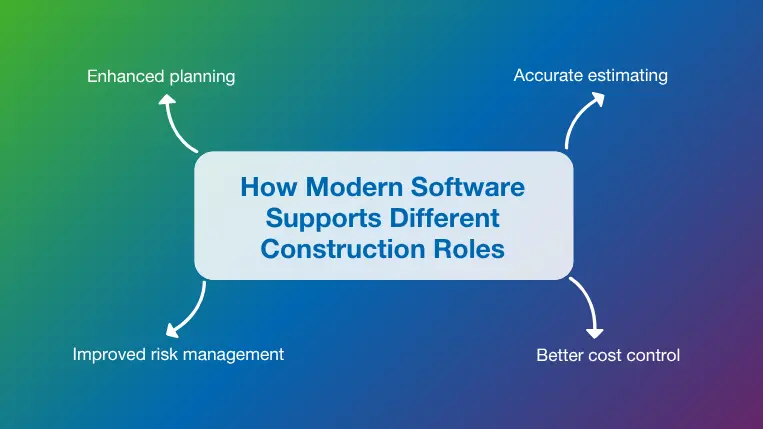
To support the various construction roles to work together efficiently, they must lean into the right technology. Bonus benefit: it helps to differentiate them from competitors to automate processes that boost productivity. Modern construction software solutions offer some key benefits for construction teams, regardless of their construction workers titles.
If this varied list of construction roles is anything to go by, it’s easy to see how teams and trades approaching project delivery from different areas of expertise and functions struggle to get onto the same page. Collaboration in construction usually breaks down when the professionals rely on traditional methods – or slow, manual, fragmented, and reactive processes. The results paint a scary picture:
Even within the broader context of a common goal, each stakeholder has their own micro-objectives and timelines that don’t mesh with other trades involved in the same project phase. Poor communication puts uncoordinated teams at risk of delays, rework, frustration, and increased costs.
Construction projects by nature can be spread out and complicated, with everything from materials and supplies to plans and written documents scattered, or using incompatible file-sharing systems. It ends up with different teams working on different versions of the same plans or documents, which poses schedule and safety risks.
It's often just challenging to find the time to coordinate with other teams with schedule compression becoming more common in construction. Contractors try to meet aggressive deadlines, which usually involves overtime work, fast-tracking activities, and cutting the time available for information exchange.
The bigger the construction project, the more frequently timelines, budgets, and designs change. Not all stakeholders realize the impact of changes on their part of the project at the same time.
Misalignment shows up right from the start of a project with poor collaboration culture. This is exacerbated by the resistance to new approaches to construction management and poor technical literacy. We can think of at least ten ways that effective collaboration benefits construction and the professionals involved – and one transformative way to claim them.
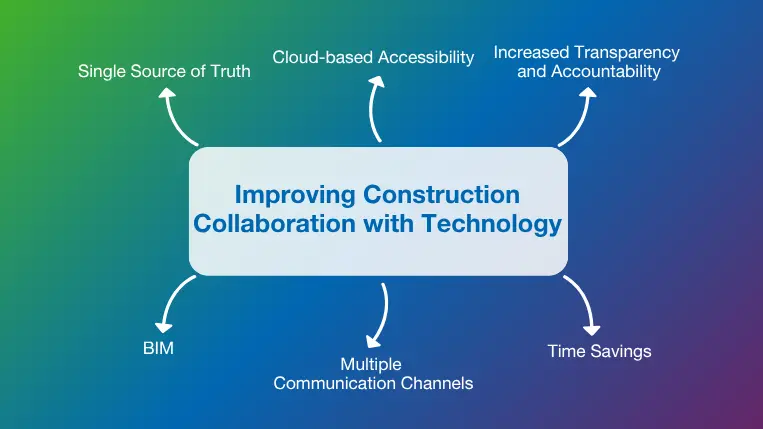
For different construction roles to work well together, everyone must be on the same page. Technology makes that possible – in fact, it optimizes collaboration for the benefit of the entire project and all stakeholders.
Single Source of Truth: Construction collaboration software helps make the shift from outdated specs and blueprints to easy access to a consolidated repository of all project drawings, contracts, changes, and other information critical to on-the-spot decision-making. There are fewer misunderstandings that can cost the project time and money.
Cloud-based Accessibility: Cloud computing offers the convenience of mobile-friendly software applications, secure data storage, and computing resources on remote servers that project teams can access anytime, anywhere, without limitations on user access or data volume. It provides real-time access to project information, an easier way to exchange information quickly, and collaborate securely within a common channel.
Increased Transparency and Accountability: Digital construction technologies like drones and IoT sensors gather information on project status, bottlenecks, and errors to eliminate guesswork. It provides clear visibility across the project and simplifies the progress tracking and expense reporting processes that hold stakeholders accountable. It increases the odds of project success, improving trust, morale, and schedule adherence.
Time Savings: When the knowledge of the entire team is leveraged on a digital platform, it speeds up decision-making processes and prevents bottlenecks. Working together on a cloud-based platform keeps everyone working from the same data – tasks can be planned and structured in a way that optimizes productivity and reduces downtime, saving the time normally spent correcting errors.
Multiple Communication Channels: In-person communication was once the only option for teams in different locations or working on multiple construction projects at a time. But now, technology provides multiple channels, like mobile apps, wearable technology, cloud-based software tools, and wireless communication methods, making it possible to generate real-time reports fast and automate tasks that enhance collaboration.
BIM: Building information modeling (BIM) is redefining construction projects by providing a centralized digital platform for design teams to create and test multi-dimensional models of buildings and other structures. Different design teams can work on the project at the same time and share their important findings and observations along the way.
The construction industry is brimming with opportunities, with exciting construction titles and hundreds of companies looking for the right talent to help them boost their performance. Each role discussed in this post plays a fundamental part in successfully completing a project. Professional experience, combined with powerful digital construction technologies, can skyrocket productivity and ensure the highest return on investment.
At RIB Software, we offer a complete toolkit of solutions tailored to the needs of the different construction positions, including estimation, spec writing, planning, cost management, takeoff, document management, reporting, and much more. If you are ready to experience the power of state-of-the-art construction software, get your free demo of RIB’s toolkit today!
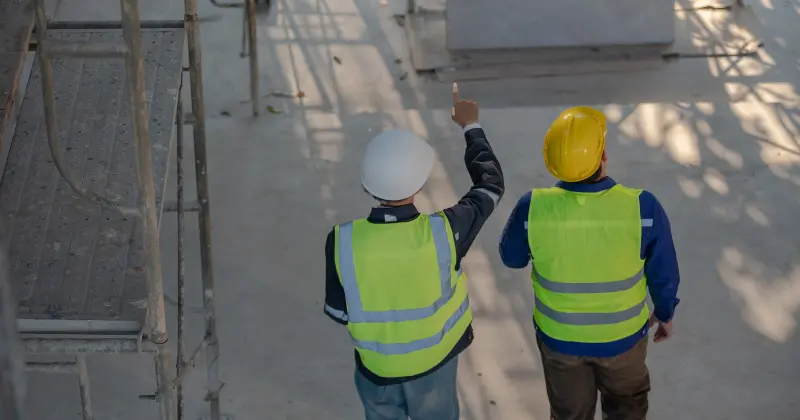
One of the major challenges in construction project management is that productivity is not improving as rapidly as the industry...
RIB Software’s Jared Halbert, Senior Consultant, looks at why the right digital framework is essential for sustained, sustainable construction For...

What separates a successful construction project from a failed or break-even build? One of the most critical aspects to consider...