
Ebook
Build Smarter. Deliver Faster. Stay Ahead

Construction projects involve major financial investments. There’s a lot that goes into each project in terms of time, materials, and labor. There are also many factors that can throw construction cost estimations and plans off. This means completing consistently profitable construction projects is tricky to begin with.
As we head further into 2024, a major challenge for construction businesses is the rising costs in the industry. Construction projects are becoming more expensive, and it’s important to understand how to respond to this challenge.
Don’t worry. Even with costs on the rise, there is always a solution to keep your construction business operating at an optimal level. We’ll cover this below.
Right now, contractors are faced with the challenge of rising costs in projects. Here are some of the main reasons why this is happening.
The construction industry is facing a shortage of skilled labor, which is driving up costs in the sector.
The demand for new construction projects is increasing, but the supply of trained personnel has not kept pace. This has resulted in a competitive labor market. Contractors are bidding for a limited pool of individuals, and salaries are rising.
Labor shortages are particularly pronounced in the infrastructure sector. This is proving to be a significant challenge for the construction industry and it is likely to continue affecting costs in the sector for the foreseeable future.
The construction industry is also facing significant rising costs due to a shortage of materials.
The demand for building materials such as lumber, steel, and concrete has increased. This has been driven by the growing demand for new construction projects. However, the supply of these materials has been unable to meet this demand, leading to price hikes and shortages.
This is due to factors such as:
A current construction study revealed that 97% of companies that deal with heavy materials (lumber, concrete, steel) expect material pricing to stay high in the year ahead.
As a result, contractors face higher costs for raw materials and supplies, which are then reflected in the overall cost of construction projects.
The shortage of materials is expected to continue impacting costs in the sector for the year ahead.
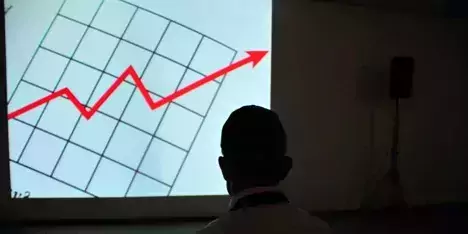
Inflation is also contributing to the rising costs in the construction industry across the globe.
In the construction industry, inflation affects the cost of materials, supplies, labor, and equipment. As the cost of these inputs increases, the overall cost of construction projects also increases. In addition, the cost of transporting goods and materials has increased due to inflationary pressures on fuel prices.
Inflation can also lead to higher interest rates. This can make it more expensive for contractors to borrow money for their projects.
Essentially, many “small” factors that contribute to the costs in the construction industry are on the rise due to inflation. This makes a BIG difference to the overall project cost at the end of the day.
Unfortunately, businesses in the construction industry can’t control rising costs. However, it is possible to work around these rising costs to keep your business operating with a strong margin.
Combating rising costs in the construction industry requires tailored approaches. Each region, contractor, and specialization will face unique challenges.
However, utilizing the right digital construction technology offers an effective solution. Investing in new software tools can bring many long-term benefits. For example, building information modeling (BIM) software can enhance accuracy, improve planning, and keep projects on schedule, ultimately saving time and money.
In addition, advanced cost management software can improve your company’s efficiency, data management and insights, as well as cost control. So, having a complete construction management solution can result in significant cost savings.
Other technology you can adopt includes safety equipment, such as drones or smart PPE with sensors. This helps to reduce risks and hazards faced on-site, keeping workers safe. As a result, there are fewer costs relating to injuries.
While there may be initial investments required for implementing the new technology, taking on the right tools can ultimately offset these costs and help improve your profit margin over time.
The rising costs in the construction industry are certainly a challenge for many contractors. However, using the right tools means that you don’t have to miss out on your bottom line. At RIB Software, we offer a wide range of solutions developed by industry experts that will equip your business to face whatever financial challenges and uncertainties the industry throws. If you are ready to experience the power of modern construction technology, get a free demo of RIB's toolkit today!

What separates a successful construction project from a failed or break-even build? One of the most critical aspects to consider...
RIB Software’s Graeme Braybrooke, Customer Success Director, looks at why digital is the DNA of sustainable construction While sustainability is...

Good cost estimation in construction is a vital aspect of any new project. Accurately estimating costs will help prevent potential...