
Ebook
How Artificial Intelligence Redefines Construction


Construction sites are among the busiest workplaces in the world. With so many tasks to manage, hazards to avoid, and deadlines to meet, there is no room for confusion over roles and responsibilities, or the precedence of company or project titles. That is the basic premise behind construction hierarchy.
In this blog post, we break down the concept of construction management hierarchy by reviewing the common roles encountered within individual projects or businesses, and the ways they interact to form a cohesive unit. We also provide a useful set of tips construction professionals can use to improve collaboration within these well-defined boundaries.
The hierarchy refers to the organizational structure construction companies establish for communication pathways and decision-making responsibilities. These structures apply to roles within each company, as well as the industry norms for chain-of-command on busy jobsites.
An established hierarchy is often accompanied by an organizational chart and detailed job descriptions to explain the relationships between each role and the tasks they are responsible for. The tiers and responsibilities defined in these documents remain applicable regardless of company or project size.
Clear lines of authority and well-defined roles are important in any industry, but they are especially critical for construction projects where large teams are often working together for the first time, and any mistakes or miscommunication can directly impact project safety, quality, costs, or on-time completion. A construction hierarchy chart creates a logical flow of information that minimizes confusion and indecision.
A logical construction hierarchy also improves accountability, with each manager, specialist, or individual worker knowing how and when to report their progress, while also understanding their unique role in the project or company. This structured approach provides stability and consistency throughout the project, while helping to avoid overruns stemming from unreported problems or delays. The hierarchy also improves jobsite safety by ensuring control measures and training requirements are propagated throughout the workforce.
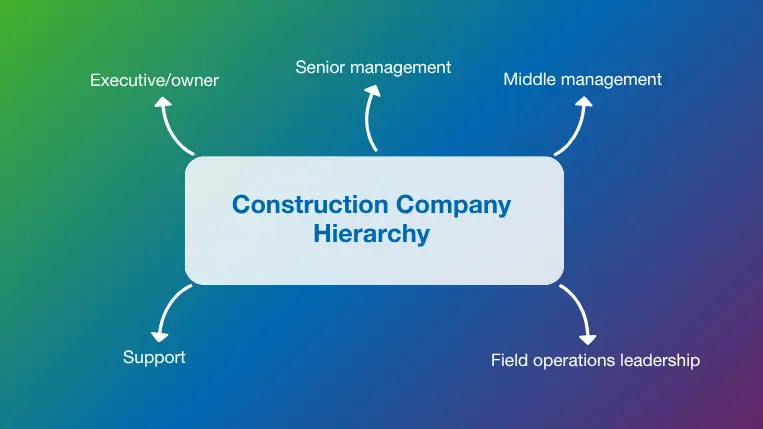
Construction projects feature two overlapping organizational structures, with the construction job title hierarchy established by each company intertwined with the project hierarchy that defines the relationships between stakeholders with respect to task completion. Company hierarchies follow a consistent pattern, regardless of the business size or location.
At the top of the ladder is the construction executive or business owner. This individual is responsible for establishing a strategic vision that extends to each new project, overseeing funding sources and financial health, and making the most critical decisions on project viability, budgeting, and resourcing. The top executive typically communicates directly with members of the senior management team.
Top management roles in a construction company, including division managers, project executives, and senior construction managers, take a more hands-on role in project planning and oversight, while typically reporting to the CEO or owner. Depending on the department they oversee, these executives are likely to lead middle managers in engineering, project management, accounting, and other functions with responsibilities spanning multiple project locations.
The next level of management in the construction job titles hierarchy is responsible for communicating the goals and objectives of the leadership team to stakeholders with more direct project responsibilities, such as construction engineers, surveyors, project managers, and procurement teams. Middle managers act as a bridge between management and frontline workers.
Leaders working on the jobsite regularly, such as construction foreman, superintendent, and quality supervisor form another important link in the construction hierarchy, since they are directly involved with problems related to equipment breakdowns, site conditions, weather events, material quality, and other factors that impact the budget and schedule. Leaders at this level communicate regularly with contractors, subcontractors, and the support staff.
The support staff is hired to complete on-site tasks outside of the scope of work outsourced to contractors, or office work like estimation, document control, and procurement to keep projects on track. On-site workers usually report to someone in a field operations leadership role, while office personnel typically report to a middle manager or supervisor within their own department.
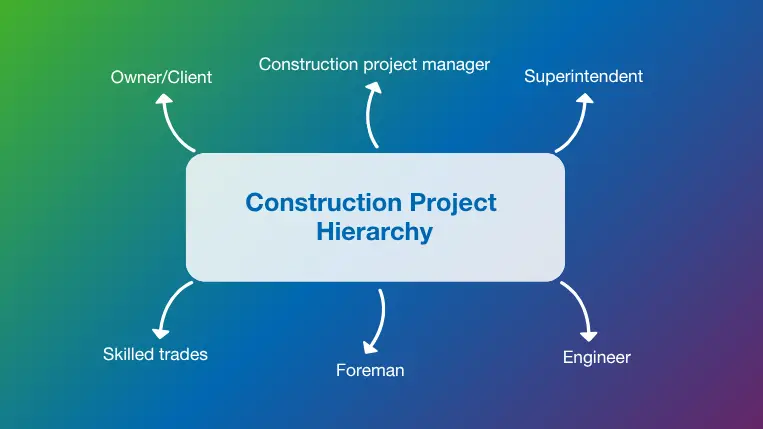
The hierarchy for each project is similar to the one established for an individual company, but it is based on the chain of command of a single project. Communication protocols gain importance in this context, since any variation from the established construction hierarchy chart can lead to delays in task completion.
In the project context, the owner or client is the key decision-maker, as they establish the scope and initial budget for the project while taking a leading role in selecting general contractors, consultants, and other key personnel.
The construction project manager is the person responsible for scheduling, budget creation, resource allocation, and daily oversight. As such, this key role collaborates regularly with the general contractor and on-site superintendent to verify activities are completed according to plan. Unlike many of the roles described in the construction job title hierarchy, this position is likely to be filled by a different individual for each new project.
The construction superintendent is responsible for the day-to-day management of field operations, safety compliance, and quality control. The superintendent communicates regularly with the project manager, providing status updates directly from the work location, sometimes with the aid of mobile-friendly construction software tools.
Field engineers also form a vital link between the jobsite and office, but they specialize in bringing their knowledge of design concepts, materials science, sustainable building practices, and other technical disciplines from the office to the site. The engineer typically reports to a project manager or engineering manager, and they must also work closely with the superintendent, architect, foreman, and contractor.
The role of the foreman is similar to that of the superintendent, but the foreman only oversees one specific crew or trade, while the superintendent monitors the work of all crews. With this natural synergy, it is not surprising to find that most foremen report directly to superintendents, providing them with the detailed information they need to communicate status directly to project leaders.
Specialized trades like electricians, plumbers, heavy equipment operators, and carpenters are often found at or near the bottom of the construction hierarchy chart, even though their skills and work output form the backbone of the project. Workers in the skilled trades typically report on work progress and issues through their designated foreman.
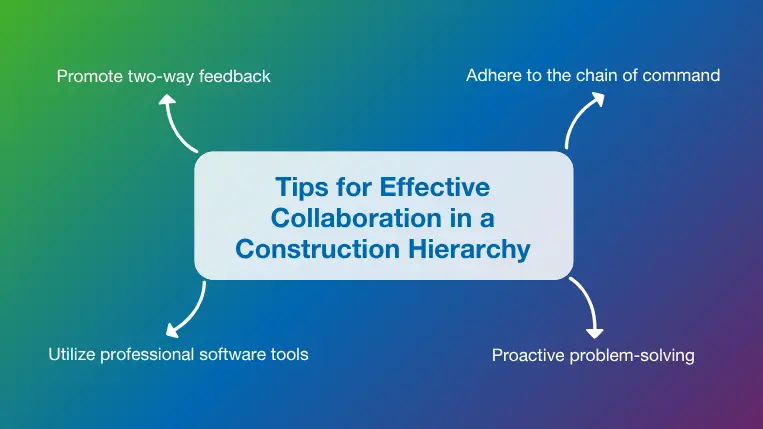
Establishing a logical hierarchy on paper is important, but turning this concept into a functional project or business structure takes commitment and discipline. Collaboration is the underlying factor that makes the hierarchical structure work.
The cascading format of an organizational chart implies that all information flows downward from supervisor to worker, but this is not always a correct assumption. Establishing trust and open communication between levels requires active listening and open forums that promote the two-way exchange of ideas and relevant suggestions.
Communication between all levels and stakeholders helps to build a more cohesive project team, but it is vitally important to adhere to the established chain of command. For example, an electrician witnessing a safety issue might communicate the problem to an engineer or superintendent, but they should also ensure their foreman becomes aware of the issue immediately, rather than assuming they will learn of it through other channels.
A culture of problem solving is a superior alternative to a culture of blame. In other words, personnel at each level of the construction hierarchy should seek opportunities to involve workers at levels above or below to participate in cooperative problem-solving activities. This allows each team (and the overall project) to improve collaboration while leveraging the skills and expertise of each individual.
Construction software tools improve collaboration by connecting all stakeholders to a unified source of real-time information. This makes it easier for team members to report on quality issues, material deliveries, safety concerns, and project status, while helping to avoid data silos and outdated information. RIB Software improves communication across all levels of the hierarchy, with purpose-built solutions for field operations & management, procurement, operations & maintenance, and cost control that bridge gaps between the office and field.
While the concept of a flat organizational structure has found its way into many other industries, the well-defined personnel levels and chains of command in construction continue to endure. This structured approach to operational excellence becomes a benefit rather than a liability when software tools are used to seamlessly communicate project information throughout the organization.
RIB Software supports the work of stakeholders at all levels of the hierarchy, with features like on-screen takeoff, interactive building information modeling (BIM) accessibility, automated revision tracking, and embodied carbon calculations taking the legwork and guesswork out of common project activities.
RIB makes it possible to adhere to established communication channels while completing essential tasks more efficiently than ever. Get your free demo today to discover how a digital transformation can unify and empower your organization!
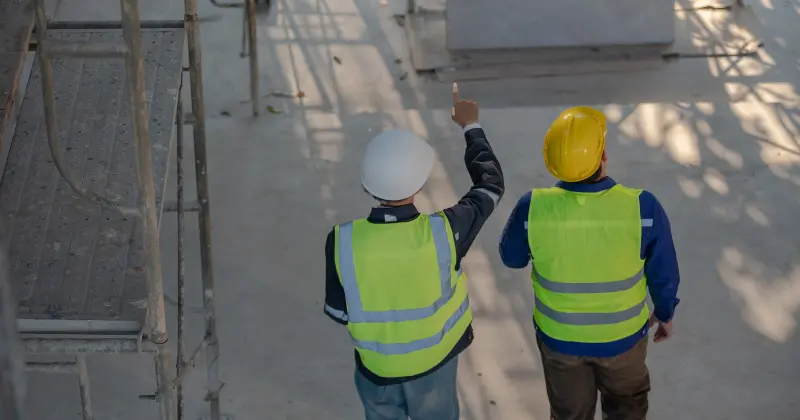
One of the major challenges in construction project management is that productivity is not improving as rapidly as the industry...
RIB Software’s Jared Halbert, Senior Consultant, looks at why the right digital framework is essential for sustained, sustainable construction For...

What separates a successful construction project from a failed or break-even build? One of the most critical aspects to consider...