Ebook
RIB CostX eBook - The Ultimate Estimating Solution


Cost allocation and tracking processes in construction can be challenging, with each project bringing unique variables and unknowns that make it difficult to predict and manage expenses. Job costing tools and practices have improved in recent years to overcome these challenges and improve financial outcomes for both contractors and clients.
In this blog post, we explain the definition, purpose, and benefits of construction job costing, and provide some common sense solutions to frequent challenges. We also examine the important role of software tools, as we review the key features and capabilities that help to streamline the job costing process.
Construction job costing is a valuable accounting process used to assign all costs to a specific project or job, and allocate expenses related to materials, labor, equipment, and overhead. This process helps to assess financial performance while detecting budget deviations.
A complete cost breakdown, including all anticipated direct and indirect expenses, is the first required element of job costing. The scope of work (SOW) is then divided based on the activities required to complete the project. Once this basic structure is in place, costs are tracked and allocated meticulously over the course of the project to maintain budget adherence and avoid unexpected overruns or resource constraints.
Job costing for construction is sometimes confused with process costing, but the two concepts differ in their purpose and application. Process costing is commonly used for high-volume manufacturing, since the cost of producing each product is usually very similar. Rather than tracking costs for each individual unit, the material, labor, and overhead expenses are accumulated over time, then divided by the total number of products to establish a standard cost.
Construction projects rarely involve repetitive products or tasks with identical costs, since contractors typically work on multiple custom projects simultaneously, each with different expense categories and material types. Job costing provides greater flexibility and granularity for these situations, making it preferable to process costing methods for most construction applications.

Job costing requires additional accounting and expense tracking steps that consume time and resources, but the process also enhances financial sustainability and improves budget compliance with benefits that include:
Construction job costing mirrors hierarchical systems like CSI MasterFormat used to organize project information based on predefined activities and categories. Tracking expenses with this high level of granularity allows any budget misalignment or overrun to be detected and mitigated quickly, and ensures the source of all direct costs is understood.
The detailed tracking and real-time expense management provided by job costing allow general contractors, project managers, accountants, and other stakeholders to anticipate future cash inflows and outflows, and plan accordingly. This improves decisions related to things like resource allocation, procurement, and payment schedules. Cash flow projection reports are used to summarize and communicate these valuable insights.
Construction cost estimation requires an accurate and detailed breakdown of material, labor, equipment, and overhead costs to maintain their accuracy. Job costing examples create a valuable source of historical information for future estimates, pointing out precisely how and why costs were under or over-estimated for each category or activity.
Job costing addresses financial risk factors like unplanned or unreported expenses by imposing more rigid tracking that prevents potential cost issues from escalating into more serious problems. Issues identified through the construction risk management process also allow appropriate contingency budgets to be established to handle unexpected expenses while still conforming to the project budget.
By carefully tracking every dollar spent on a project, job costing provides a high level of visibility into budget adherence and resource allocation. Construction job costing software allows clients and contractors to share and review this information at any time. This reduces the number of surprises related to expenses while improving the trust and accountability that lead to repeat business.

Unlike process costing and other less data-intensive construction accounting methods, effective job costing is only possible with timely and accurate cost and expense information. This introduces challenges and obstacles that include:
Without a clear and detailed project scope, job costing is extremely difficult, since the method relies on accurate information to define cost categories and compare them to actual expenses. Poor scope definition can lead to cost overruns or inflated bids that impact the financial viability of the project.
An inaccurate or incomplete scope is also a common cause of “scope creep,” where additional features and functions are added throughout the project to expand the budget and duration beyond client expectations. Work breakdown structures (WBS), building information modeling (BIM) platforms, and collaborative preconstruction meetings are among the tools and practices used to keep scope changes from limiting the benefits of job costing.
Construction materials, labor, equipment, and other costs are subject to change at any time. Although these cost fluctuations are an accepted part of doing business, they also make job costing for construction challenging, since they can render initial cost projections obsolete. This is especially true for materials like lumber, steel, and aluminum that are subject to high demand and global shortages.
To prevent price fluctuations from impairing the job costing process, accurate initial estimates, based on a combination of current pricing, historical trends, and advanced forecasting methods, help to make expected costs as realistic as possible. As actual costs vary, the best construction job costing software makes it easier to adapt expectations for each activity and category.
While software helps to support efficient and organized job costing, communication between stakeholders is also important, since real-time expense information from the field is needed to prevent errors and discrepancies. Effective change order management, to align the most current project scope and cost information, also relies on timely communication.
Clearly defined communication channels, regular construction meetings, and detailed records bridge the gaps between and within teams to ensure information is communicated regularly, and surprises are minimized. Mobile communication tools and cloud-based construction software solutions also support real-time information updates from the field.
The benefits of job costing come from capturing and monitoring all project costs and expenses to maintain real-time visibility. Hidden costs that fall outside of the original budget and create challenges for project managers and contractors include:
Robust tracking systems, employee training, and regular audits help to limit the impact of hidden costs by making expenses visible and ensuring all costs are assessed and reviewed regularly.
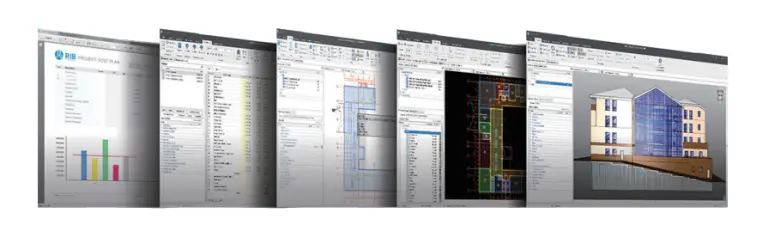
The benefits of job costing are obvious, but advanced construction job costing software is also needed to optimize the process while improving data quality and collaboration. RIB CostX is an all-in-one takeoff, estimating, and reporting solution that supports effective job costing with innovative features that include:
CostX also supports sustainable building practices with embodied carbon calculations seamlessly integrated with design, material, and cost information. The cloud-based, mobile-friendly software makes communication to and from the field fast and easy.
Breaking down granular cost information for complex construction projects has always been a difficult task. The size and scope of the buildings continues to increase just as the margins for error decrease. Organized tracking systems mirroring the overall scope of work create a framework for successful job costing, and software tools with advanced data management, analysis, and reporting features have taken this process to the next level.
RIB CostX is one of many versatile, purpose-built RIB Software tools helping to provide error-free results and minimize project unknowns while enhancing real-time data access and team collaboration.
If you are ready to learn more about the many ways RIB CostX can optimize your job costing, takeoff, estimating, and revision tracking processes, get your free demo today!

What separates a successful construction project from a failed or break-even build? One of the most critical aspects to consider...
RIB Software’s Graeme Braybrooke, Customer Success Director, looks at why digital is the DNA of sustainable construction While sustainability is...

Good cost estimation in construction is a vital aspect of any new project. Accurately estimating costs will help prevent potential...